
Coastal liming is a pathway for "Ocean Alkalinity Enhancement (OAE)" which aims to store CO2 in seawater via the dissolution of limestone (CaCO3) in organic rich sediments. (see our Explainer in Blog 1).
The first question you ask yourself when planning a field study on coastal liming is: "Are we actually allowed to do this?". In many marine science projects this question would sound weird. The assumption would likely be: "Well, we fill out the relevant forms and then we go ahead. What's the problem?!" Research into OAE is different. This research field is in an early stage. It involves the purposeful addition of materials (in our case ground up limestone) to the ocean. And, perhaps most critically, the CO2 removal context in which OAE is situated is relatively controversial. Counteracting climate change with such CO2 removal (including OAE) has been termed "geoengineering" or "climate intervention". While these terms misrepresent our research, they establish a certain framing and can stimulate certain feelings, more likely negative ones. As scientists studying these topics for almost a decade, we are well aware of the controversy and how it can influence decisions on field research.
Our field study began in April, 2026. However, one could argue that the research began long before any seawater sample was taken. Coastal liming is largely unknown to the public and authorities. There are no specific regulations for it and no readily available forms to fill out and present to a panel. Instead, many different governance bodies need to be consulted to understand which components are critical. As marine biogeochemists, this is a process that gets you out of your comfort zone.
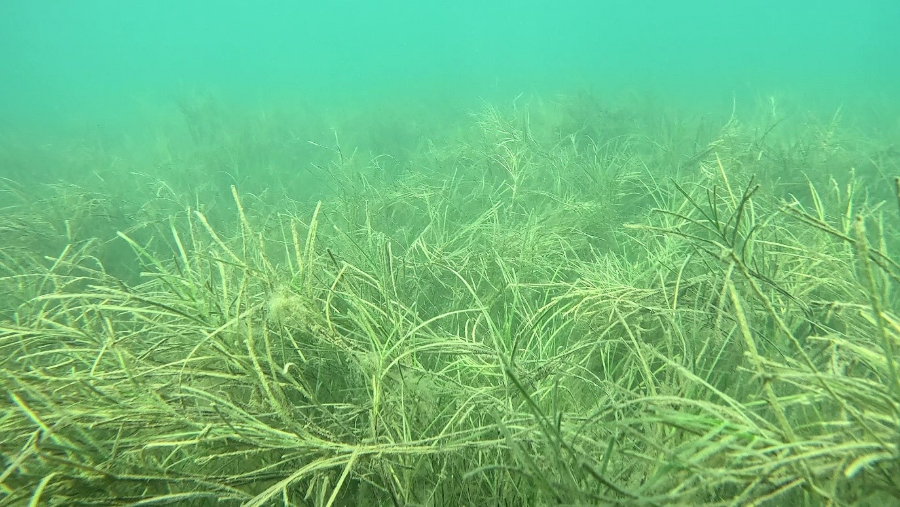
Luckily, we did not start from scratch. We had contacts from our previous small scale field study on sandy seafloor sediments in 2024. We started by reaching out to the Department of Natural Resources and Environment Tasmania (NRE) and Environment Protection Authority Tasmania (EPA). This consultation revealed that NRE was more likely the relevant regulator on the state level, specifically the Threatened Species and Biodiversity branch, the Marine Resources unit and the Property Services branch. We consulted with the Threatened Species and Biodiversity branch, to make sure our research has very little chance to coincide with threatened species. In a meeting, we presented our research and specifically the limestone additions. Two of our considered study sites were ruled out, due to potential proximity to the live bearing seastar or the spotted handfish. The third site did not flag any potential proximities. Once threatened species proximity was clarified, we consulted with the Marine Resources unit. This revealed that we need permits for sampling, specifically sediment cores and seagrass collections, which we received. The third branch was property services. A complication is that the Australian marine space is divided into different jurisdictions, such as state waters, federal waters or (in the Commonwealth) Crown Land. It turned out that our designated study site is on Crown Land, so that we applied (successfully) to receive Authority to Conduct Research on Crown Land. Another key government body is at the federal level: Waters surrounding Australia's coastlines are protected from waste and pollution dumped at sea by the Environment Protection (Sea Dumping) Act 1981. When we started consulting with the Environmental Permitting & Compliance Division, the Sea Dumping regulatory functions were associated with The Department of Climate Change, Energy, the Environment and Water (DCCEEW). However, these have in the meantime (1st July 2026) transitioned to the National Environmental Protection Agency (National EPA). Consultation with National EPA (back then DCCEEW) revealed that a permit will not be required as the study is within the limits of the state. However, National EPA requested to be updated about the study. Last but not least, we also needed approval by the university, specifically because our study involves counting the abundance of fish on our study site. This requires ethics approval, and in this process the university requested specific protocols for our study and context about research goals.
There were three key learnings from this process.
- While the process took a lot of time and effort, we received a lot of constructive feedback and help from the regulatory authorities that were involved in the process. Everyone's assessment of our research was thorough, at times critical, but always fair.
- In our OAE research bubble, we sometimes forget how unknown this idea is. As scientists we must do a better job in informing about CO2 removal broadly and (in our case) OAE specifically.
- Since even the research into OAE is in an early stage, we cannot expect that there is much regulatory clarity around research permits. However, we should work towards informing about OAE to help establishing more clarity in the medium term. A presentation about OAE at a relevant authority can be massively helpful. Field studies like the one described here is therefore not only of scientific value, but also provides great opportunities for informing the public.