
Introduction
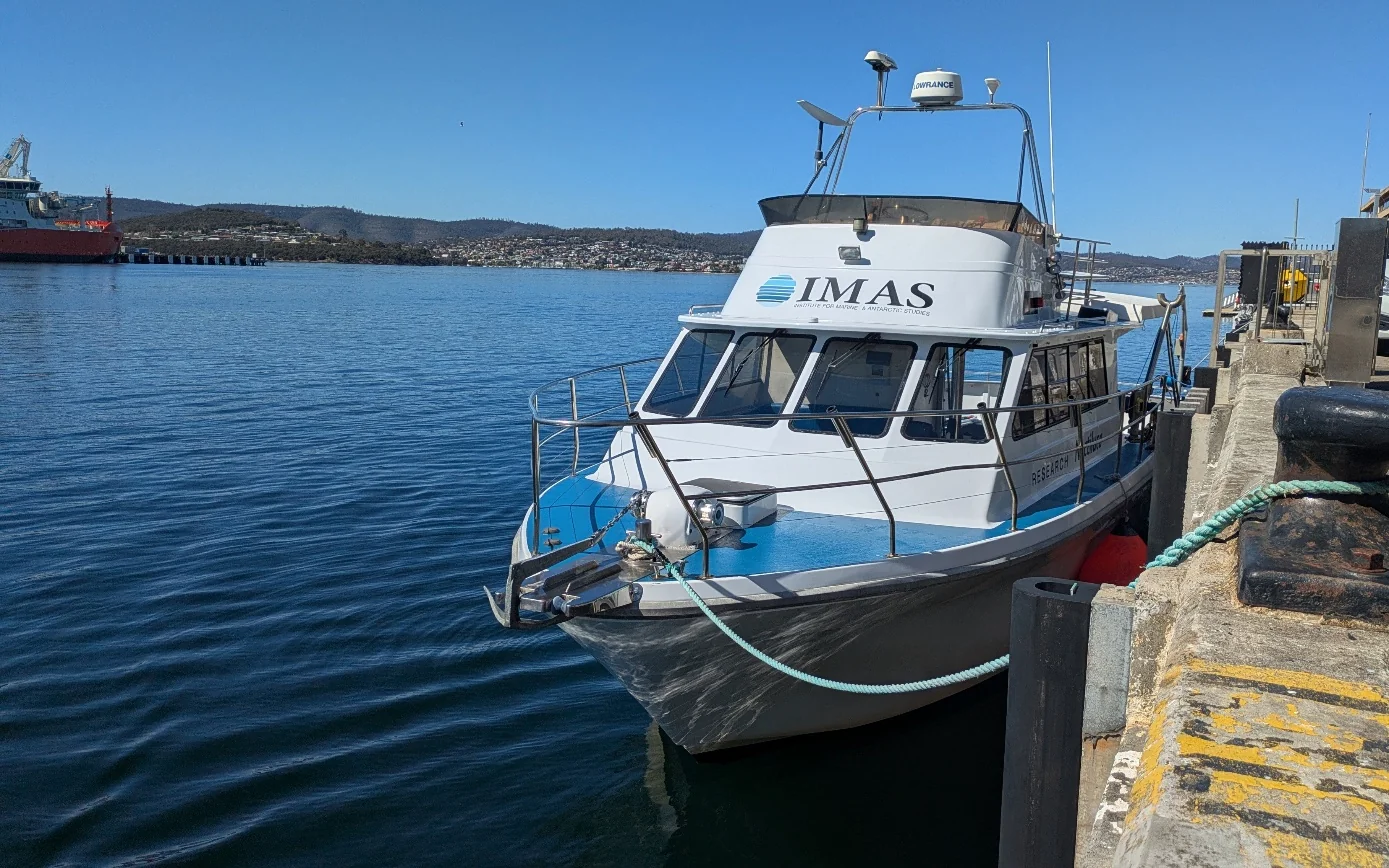
When limestone dissolves in seawater, it releases alkalinity, which allows the ocean to absorb more CO2. But as limestone dissolves the water can become supersaturated with respect to calcium carbonate, meaning solid carbonate can form again, a process referred to as secondary precipitation. This removes alkalinity from the water and reduces the carbon removal potential. On a research voyage in Bass Strait, a large vessel will release crushed limestone into the water column while I will follow behind on a smaller boat, tracking and sampling the plume. Hopefully, I will be able to do some on-board measurements to see if secondary precipitation is occurring in real time.
For more general information, see our Alkalinity Research Voyage (ARVO) page.