
Motivation
Coastal sediments are one of the ocean's most active carbon-cycling zones. Sat at the boundary between land and sea, they are influenced by organic matter, nutrients, freshwater runoff, bioturbation, wave action and tides. These processes drive a constant exchange of dissolved carbon and alkalinity with the overlying seawater, though the extent of that exchange changes both with space and time. This makes coastal sediments far more chemically variable than the relatively stable, well-mixed open ocean.
This biogeochemical variability is highly relevant for coastal ocean alkalinity enhancement (OAE), where alkaline material is added to seawater to help it absorb and lock away carbon dioxide (CO2) from the atmosphere. This works due to the seawater carbonate system, where alkalinity shifts the equilibrium between different forms of dissolved inorganic carbon, allowing CO2 from the atmosphere to be stored as more stable bicarbonate and carbonate ions for hundreds of thousands of years.
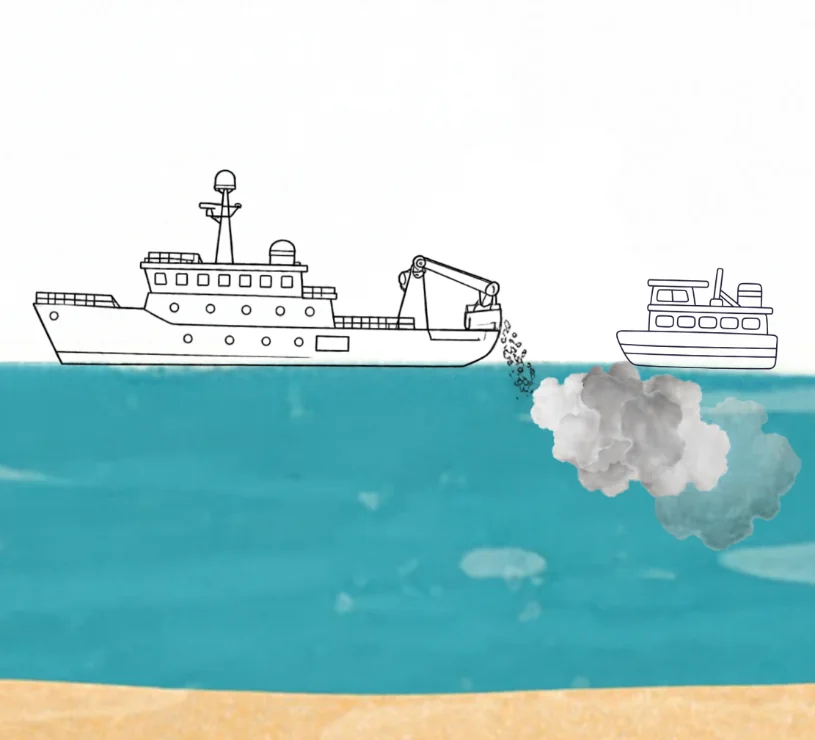
Limestone is one of the most accessible and widely proposed materials for OAE, and coastal environments are attractive for deploying it because of their ease of access and proximity to limestone sources, as well as strong mixing conditions to help dissolve and disperse it. Dissolution is further enhanced by the acidic conditions formed by organic matter breakdown, low oxygen levels and bioturbation.
However, more dissolution doesn't necessarily mean more carbon removal. The biogeochemical conditions allowing for faster limestone dissolution often coincide with the sediment already generating its own alkalinity naturally, largely due to organic matter breakdown. When this natural process is already dominant, adding extra alkalinity on top of it won't contribute much carbon removal potential. This is referred to as the additionality problem.
In some cases, dissolved limestone may even cause supersaturation with regards to carbonate, meaning it precipitates back out of the water and removes the potential for CO2 removal. These precipitation processes may occur within sediments or directly in the water column and remain one of the key uncertainties surrounding coastal OAE.
Given the strong spatial and temporal variability of coastal environments, predicting the effectiveness of coastal OAE requires a better understanding of the physical, biological and biogeochemical processes controlling alkalinity generation, carbonate dissolution and sediment-water exchange. Through a combination of laboratory experiments and field observations, my PhD project aims to improve our understanding of how coastal sediments influence carbon cycling, and how these processes may support or limit the effectiveness of limestone-based coastal OAE deployments.
Keep an eye here to see how I am collecting this data, how it is being analysed, and any interesting findings along the way!