Introduction
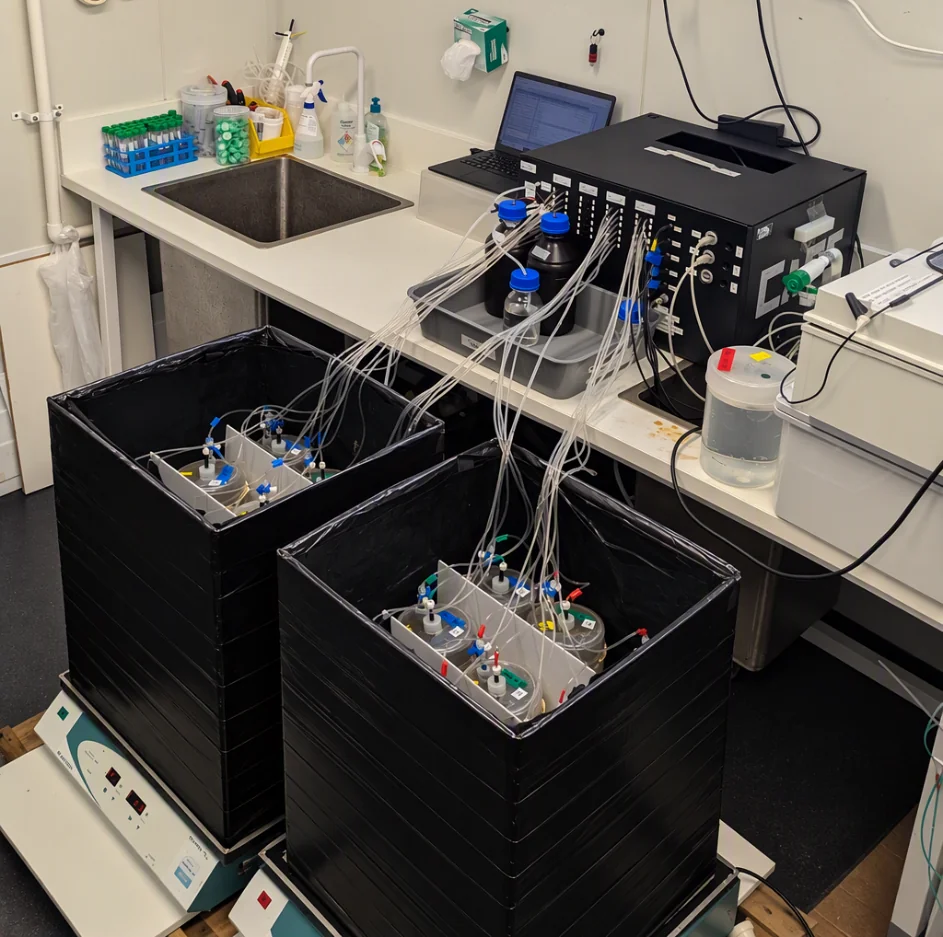
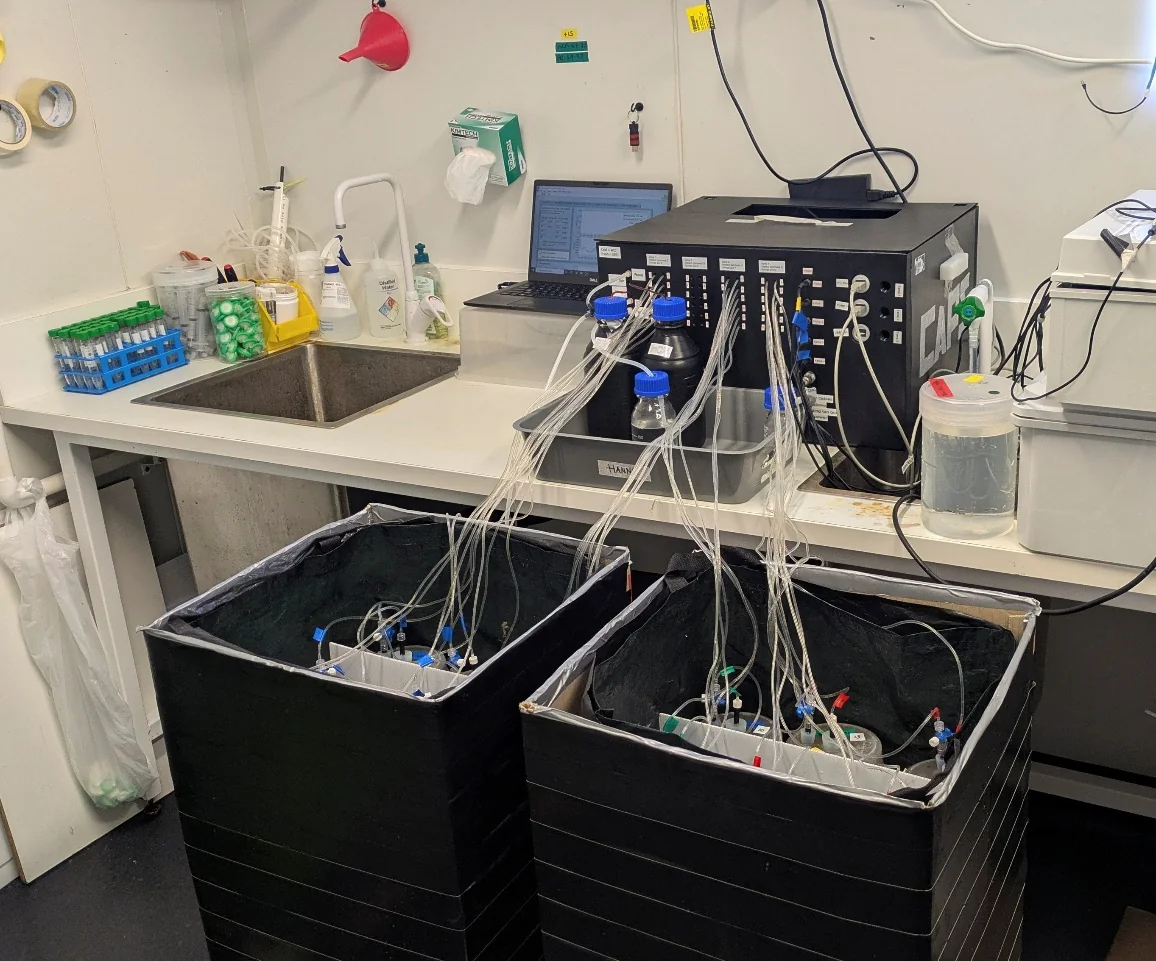
Adding crushed limestone to the coast has been proposed as an ocean alkalinity enhancement pathway. But not all coastal sediments provide the same conditions for limestone dissolution. Factors such as sediment type, organic matter breakdown, physical mixing and burrowing organisms can all influence how quickly carbonate minerals dissolve and whether the resulting alkalinity is retained within the sediment or released to the surrounding water. In this chapter, I use laboratory experiments to investigate the processes that control carbonate dissolution and net alkalinity release in sediments, helping to better understand where and when limestone-based OAE may be most effective. I alter sediment type (including artificial and natural sediments), mixing rate, organic matter loading (by adding shredded kelp), limestone addition and bioturbation intensity, and monitor changes using the Carbonate System Water And Porewater Sampling System (C-SWAPS), a semi-in situ pump system I developed that enables automated spectrophotometric pH measurements and discrete sampling of both water column and porewater chemistry, including dissolved oxygen (DO), total alkalinity (TA), and dissolved nutrients.