
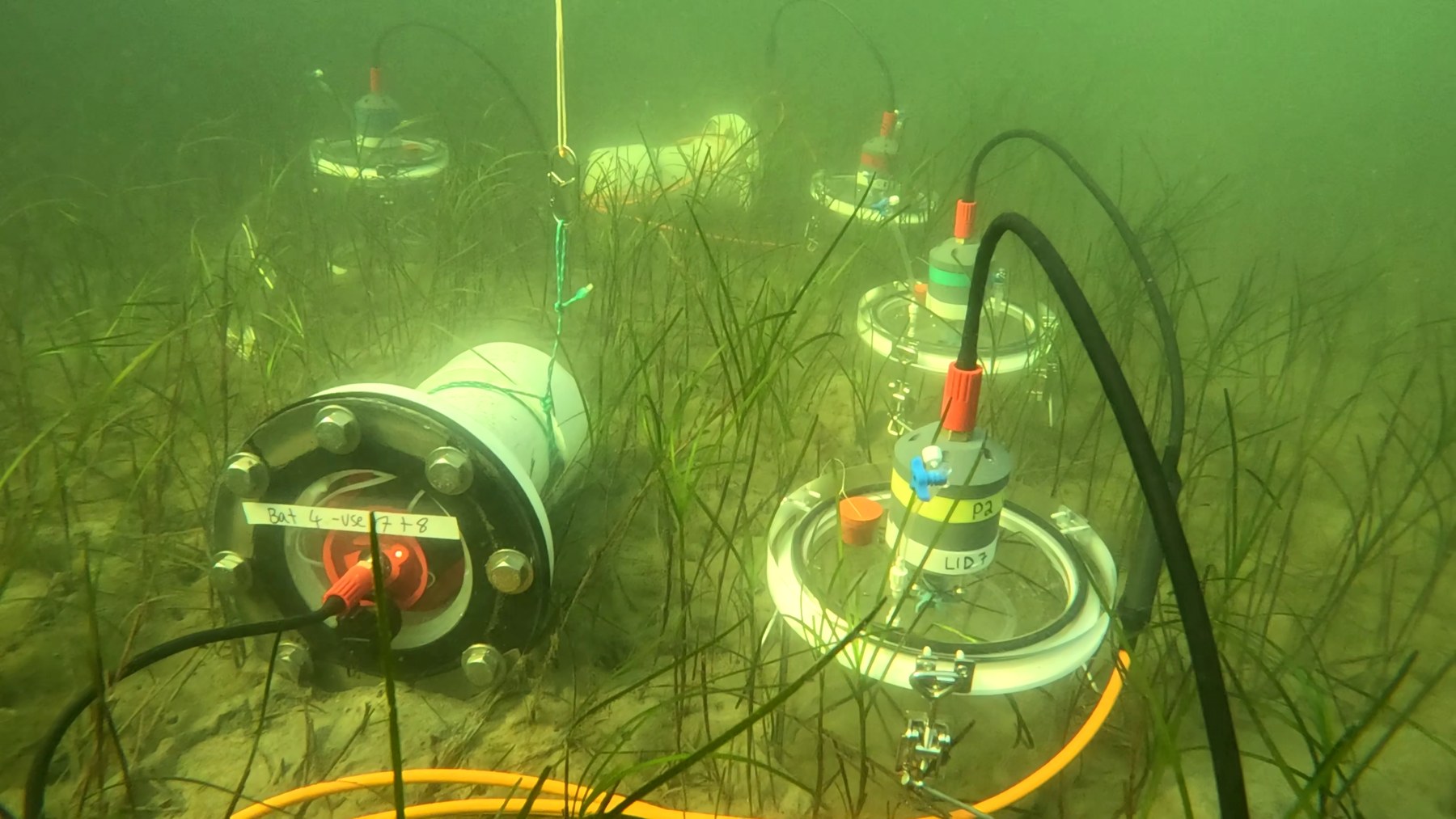
For the Trial Bay OAE field study we use various sampling methods. In this blog, we'll provide an overview...
Seawater and solids measurements
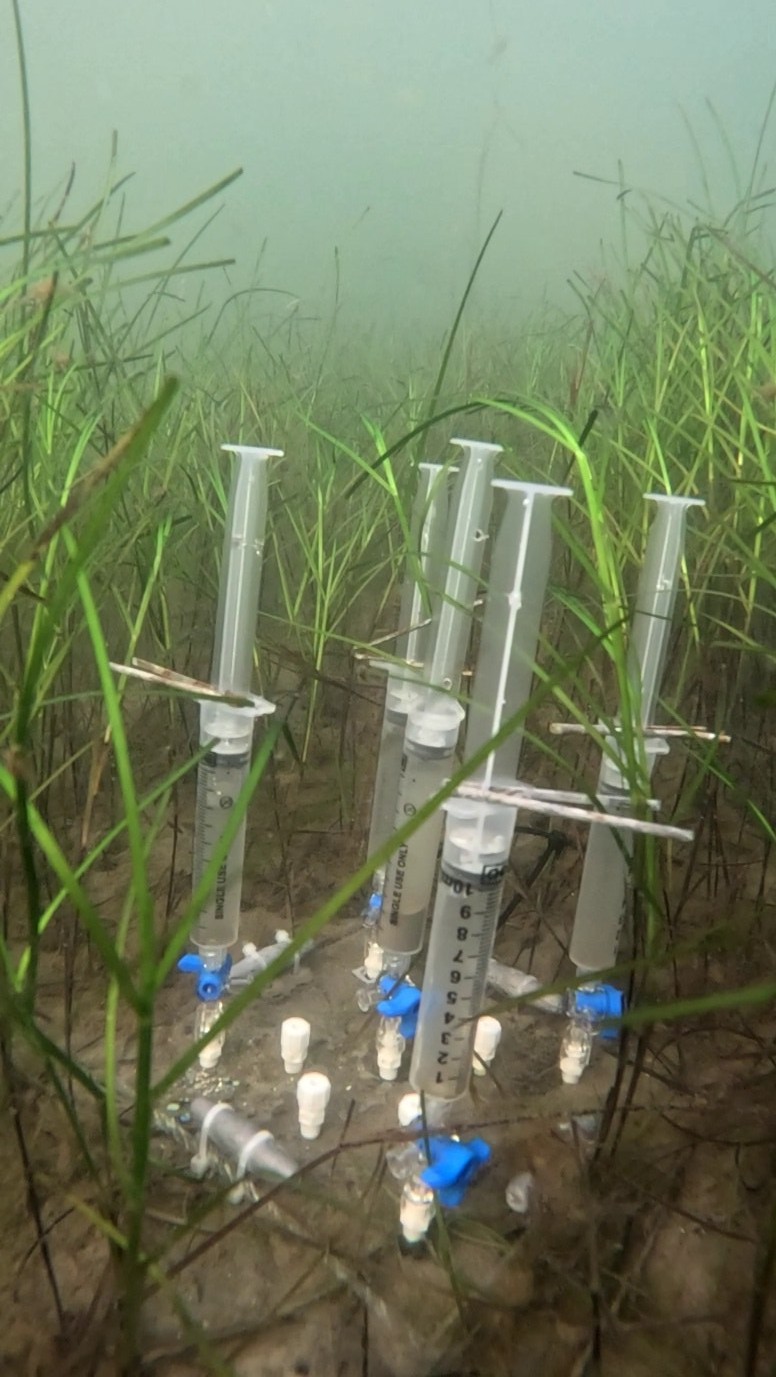
Damon created pore water sampling plates that contain plastic tubes to measure water samples at depths 0, 2.5, 5, 10, 20 cm. With these, we measure pH immediately at the surface and total alkalinity later in the laboratory. Per plot, we use 9 plates with the 5 depths, resulting in 45 water samples per plot.
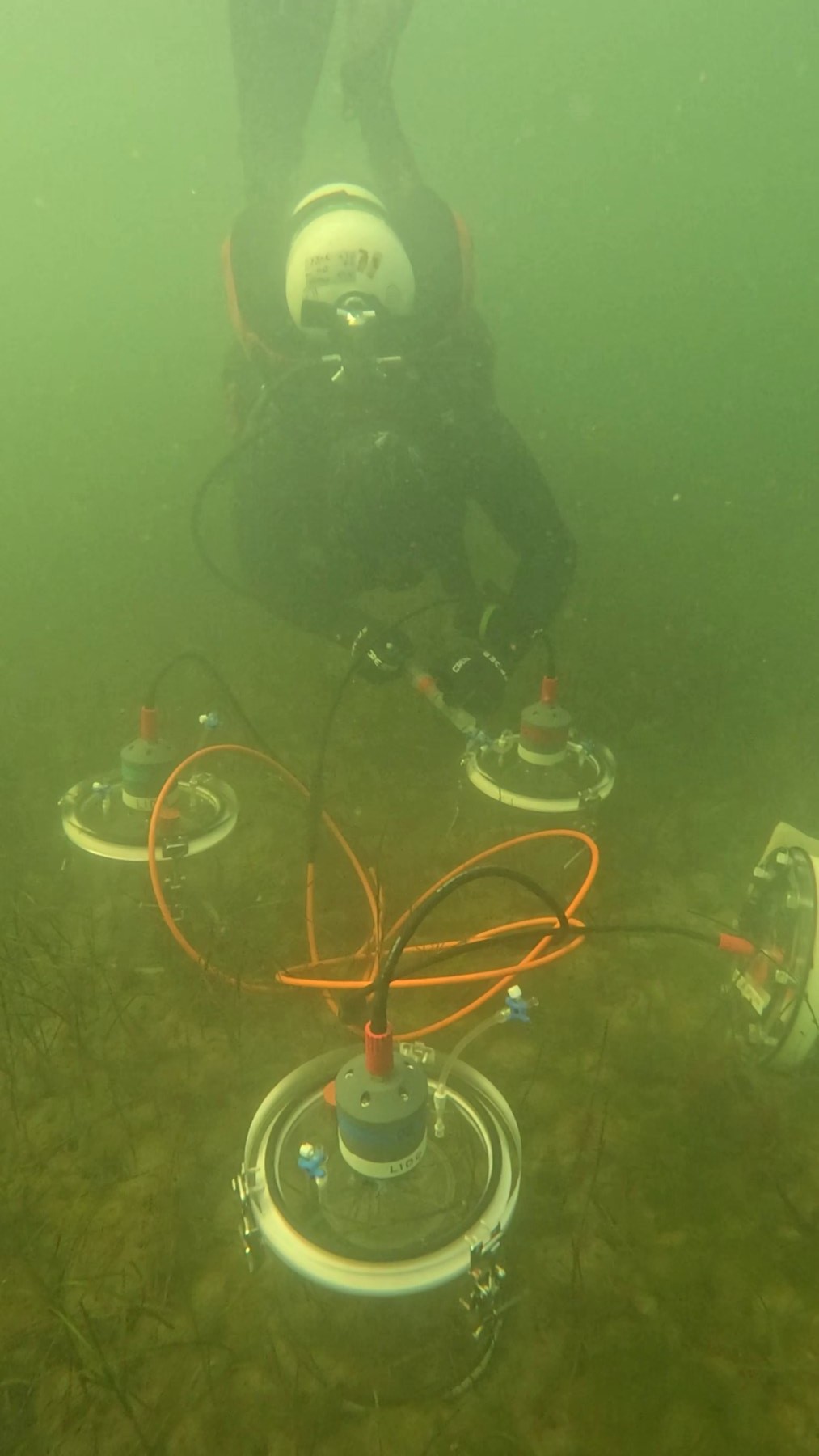
We also had chambers made to measure benthic fluxes of total alkalinity, pH, oxygen, nutrients (silicate, phosphate, ammonium, nitrate), and greenhouse gases (methane, nitrous oxide, carbon dioxide). To normalise production rates, seagrass biomass will also be measured. These chambers sit ~20 cm in the sediment and ~20 cm in the sediment surface water with a small moving disk that mixes the water. In the early morning, we set up 4 chambers per plot and cover 2 chambers to obtain net community oxygen rates for light and dark conditions. After a few hours later, we sample the seawater again. The pH and oxygen are immediately measured upon reaching the surface. Alkalinity and nutrients are analysed back in the laboratory. Collaborators Wei Wen Wong and Perran Cook from Monash University will be analysing the greenhouse gases for the project.
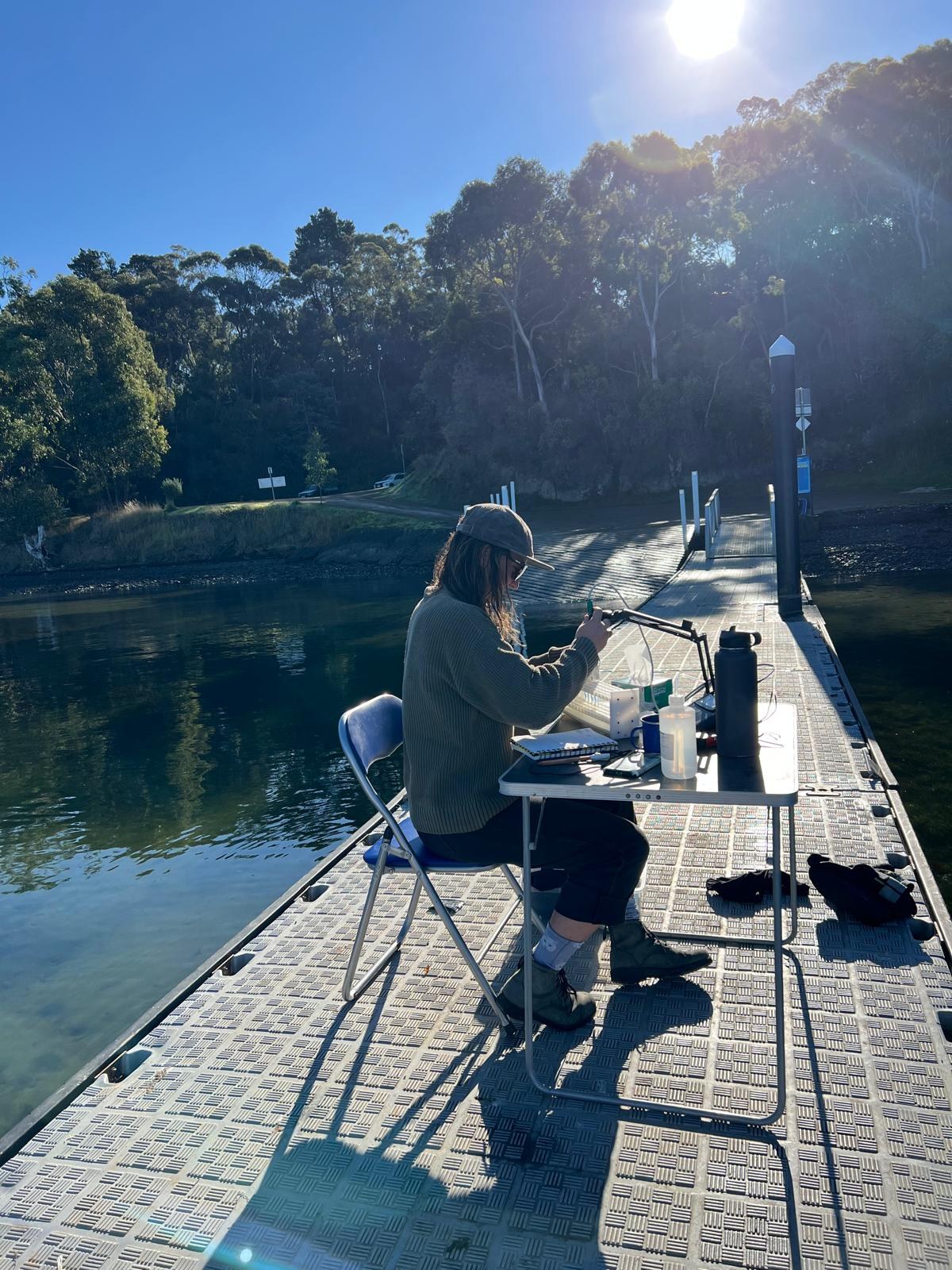
We collect sediment for various purposes. Firstly, we collect sediment for PIC/POC at different depths of up to 20 cm. Collaborators from Yale University, Gabby Kitch and Noah Planavsky, will be further analysing these samples. Secondly, sediment is collected in the tracer plots to track where particles move. The fluorescent tracer dye was provided by Alex Milde from Scaled Carbon.
Environmental assessments
For the seagrass characteristics, we are looking at biomass, density, growth, and flowering. Biomass is measured by setting quadrats and subsampling bagged seagrass and drying in the laboratory. Density is measured by counting individuals and growth is measured by measuring the height of the individuals within 3 permanent 0.25 m x 0.25 m quadrats overtime. During late spring, the collected seagrass for biomass will also be inspected for seeds.
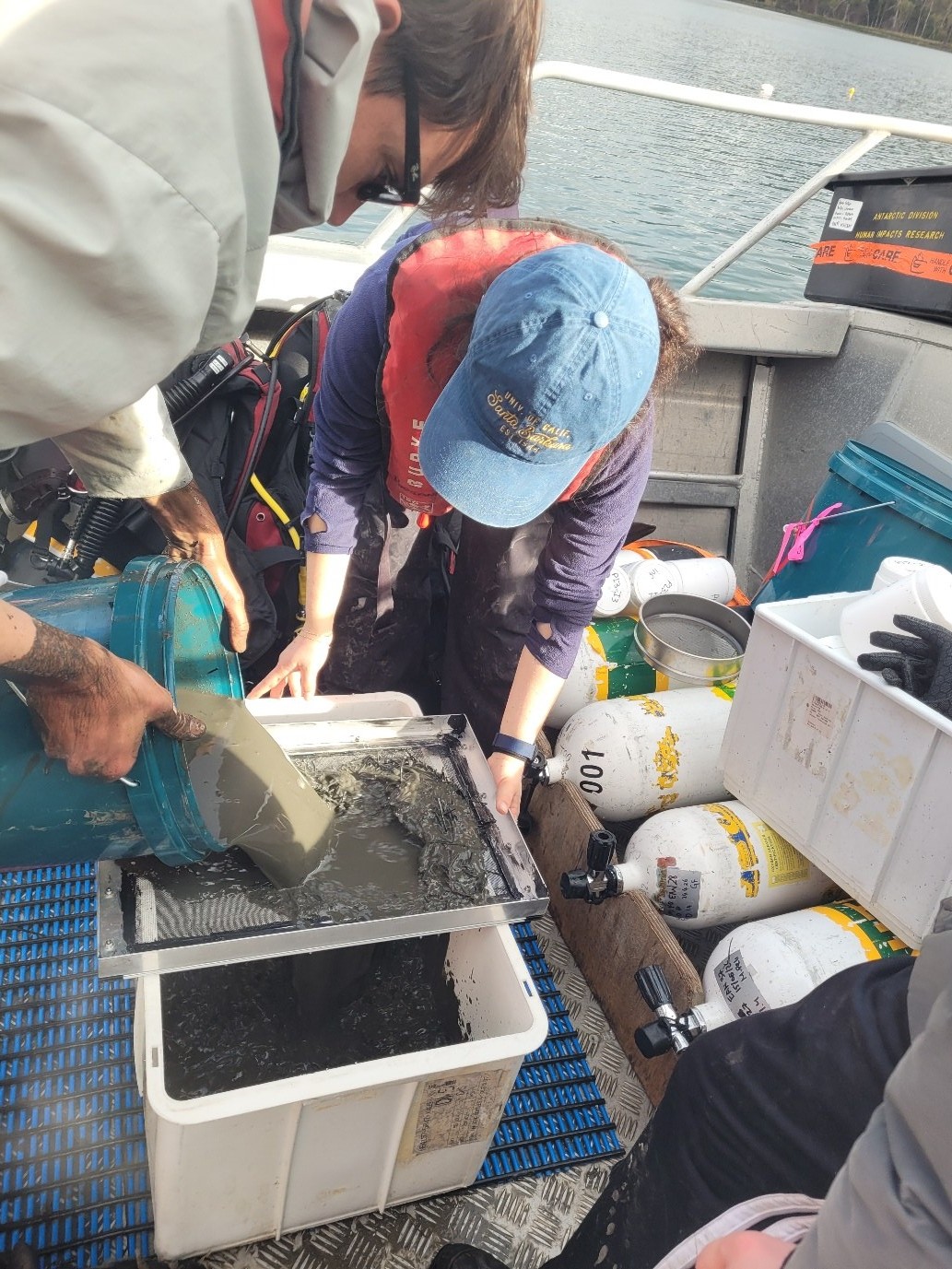
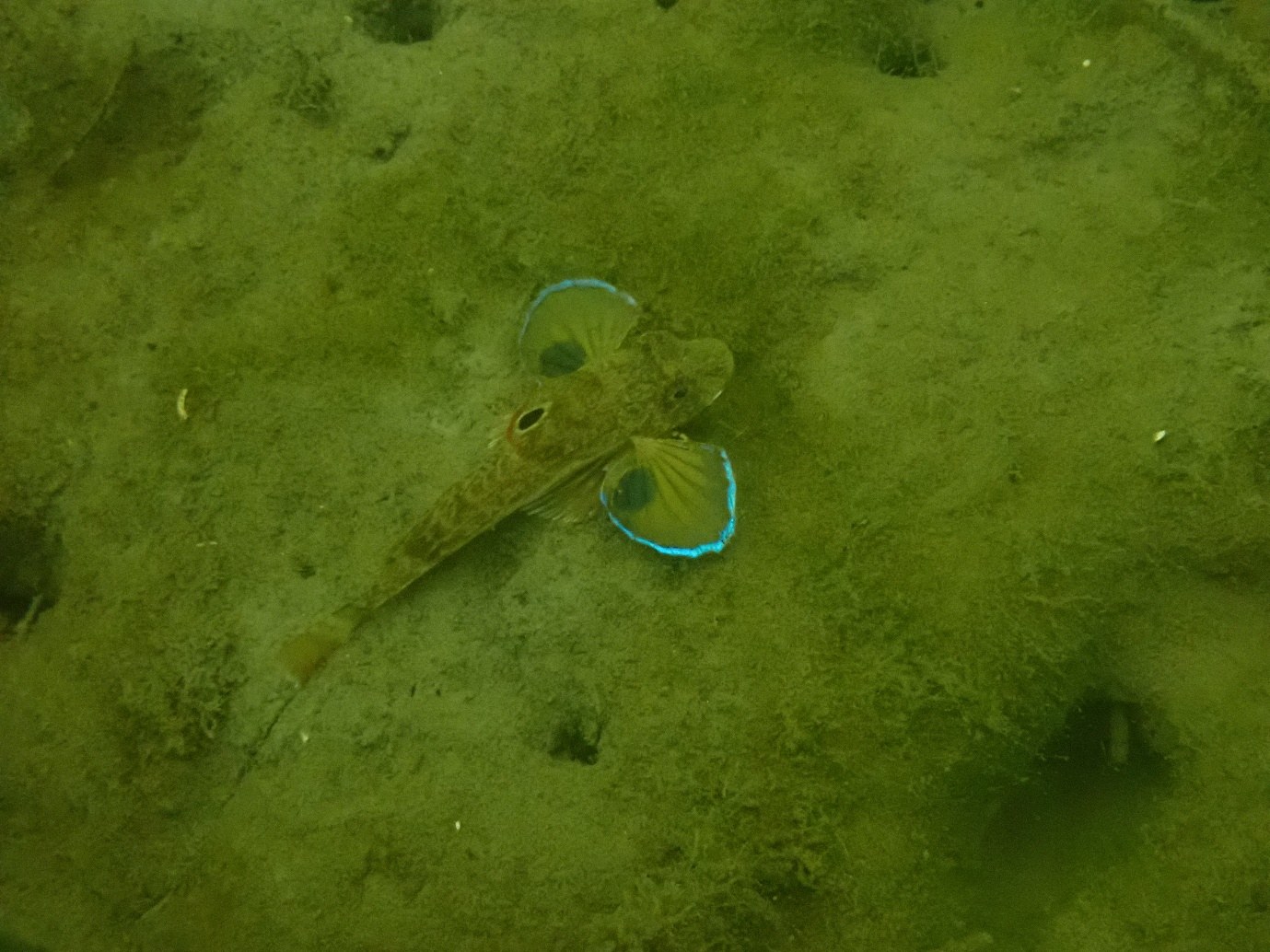
Several communities will be observed overtime, such as, the infauna, seagrass epifauna, cryptic benthic fauna, and surface sediment microbial community. The infauna community are collected with sediment cores (9 per plot), sieved on the boat, and further sieved and identified into 6 size classes. A very muddy exercise! The epifauna community is collected with the seagrass biomass bags and sieved so obtain individuals > 1.0 mm. The cryptic benthic fish and invertebrates are identified and counted in real time by Marianne who completes 2, 10 m x 2 m transects per plot. Lastly, the microbial community is collected in 2 small vials per plot at the surface of the sediment and will be further analysed for RNA by John Tracey and Alessandra Valdivia from University of Chicago.
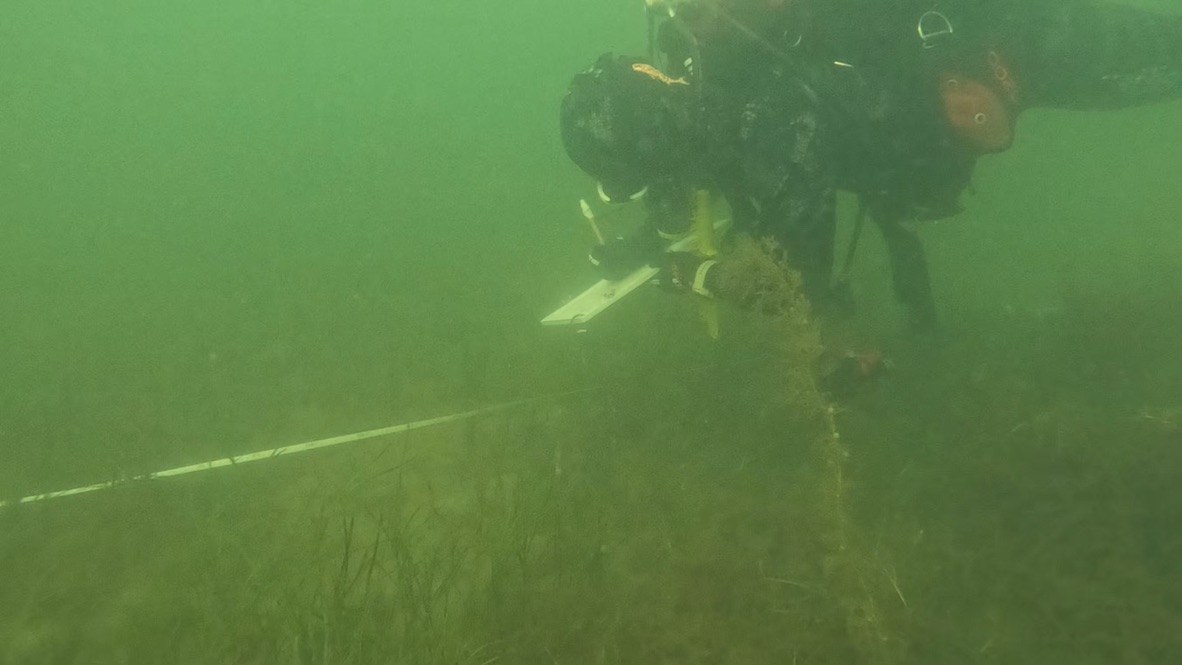
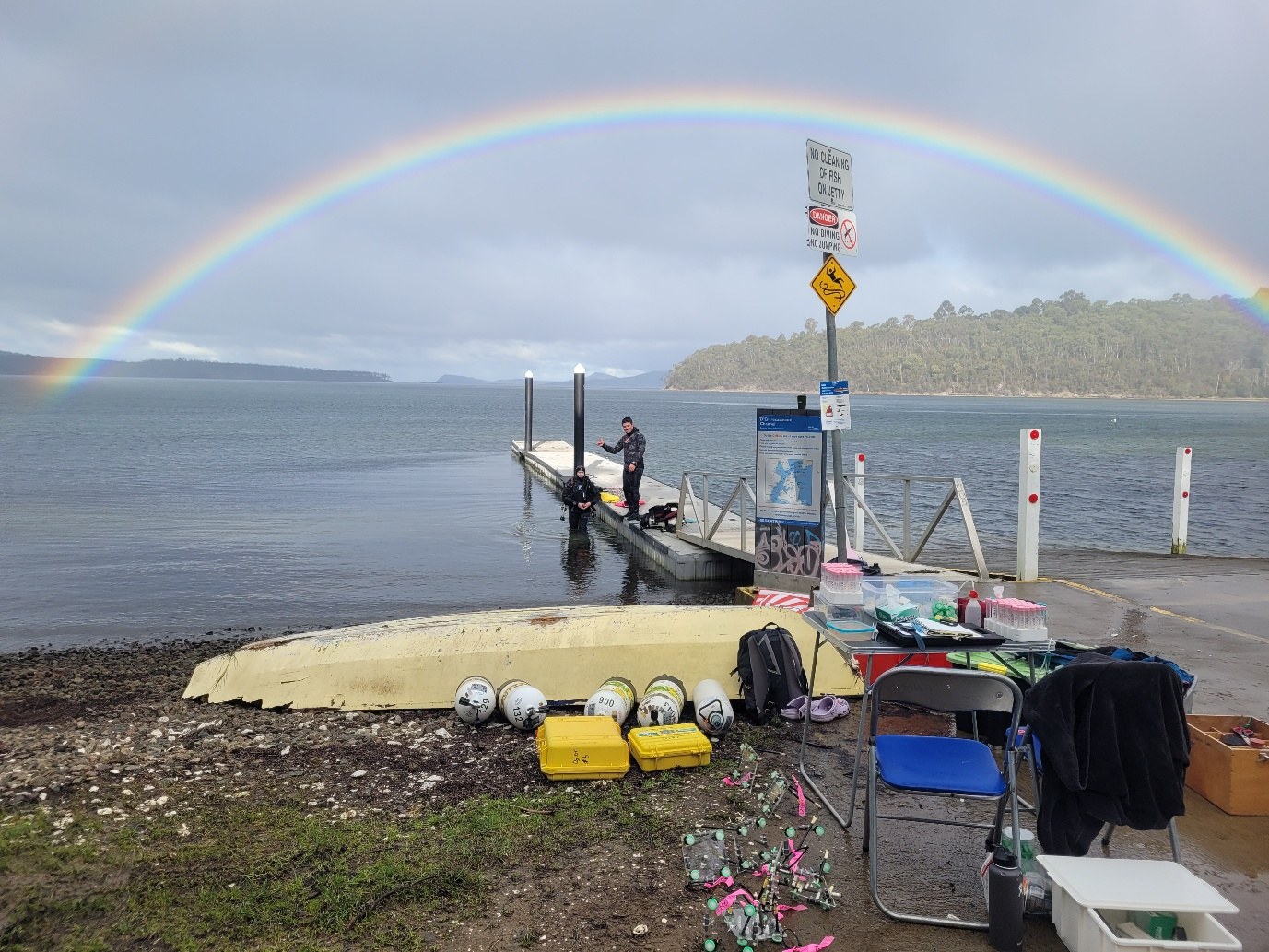
We've collected pre-limestone deployment measurements, and post-limestone deployment one week after, 1 month after, and 3 months after. As of now, we plan to collect samples 6 months, 9 months, and 12 months after limestone deployment.